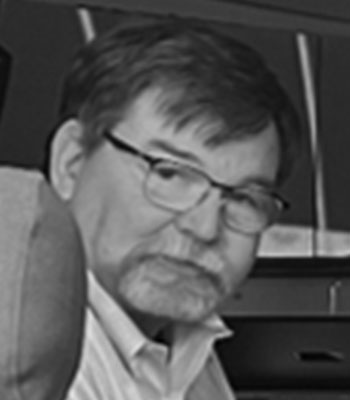
Francis Govers is the Director of Engineering for Unmanned Systems at Airbus US Space and Defense.
Francis started his career in the US Air Force as a Space Communications Operations Specialist, then went to NASA where he worked his way up to being the Lead Engineer for C2 for the International Space Station, and contributed to the space shuttle, Moon and Mars exploration, and space robotics. He was the founder of the Advanced Simulation Laboratory at TASC, and led many simulation projects for Eurocontrol, NASA, DARPA and the FAA, including the F-35 Joint Strike Fighter, BMDO, and numerous unmanned systems projects. Francis became involved in Artificial Intelligence in 1994, and has become a sought-after expert, presenting at conferences and organizations like the World AI Conference and the Horasis Global Meeting.
Francis is active in the community, and has volunteered to work with ASTM, RTCA and GAMA, as well as being active in STEM programs – BEST Robotics, FIRST Robotics, and helping found the AVR – Advanced Vertical Robotics competition, now in its sixth year. He has long standing academic partnerships with researchers at the University of North Texas and University of Texas at Arlington.
His work in robotics and autonomy started in 1984 with industrial robots for assembly lines, and, with the DARPA Grand Challenge in 2004 branched into autonomous cars. He is the designer or engineering lead for over 30 unmanned and autonomous vehicles for land, sea, air and space. His assignments have shown an increasing level of responsibility from Chief Engineer, VP of Engineering and CTO. As CTO of Gamma 2 Robotics, he designed RAMSEE, the security guard robot. He was the Deputy Chief Engineer for Unmanned Systems for the US Army’s Future Combat Systems program.
At Bell Textron, as an Associate Technical Fellow, he founded the Autonomy Department, training a large team, and supported numerous cutting-edge development projects, including the V-247 Vigilant UAS, the SPRINT high speed VTOL UAS, eVTOL proposals, the Bell FARA scout helicopter, and the Army’s Future Long Range Assault Aircraft FLRAA. He led the creation of the ALFA (Airborne Laboratory for Future Autonomy), a fly-by-wire conversion of a Bell 429 helicopter. He created the Textron Autonomy Council that coordinated autonomous vehicle projects across that organization.
Francis is the recipient of numerous awards, including five outstanding achievement awards from the International Space Station program, “World Changing Ideas” from Scientific American, the Chapter Award from the National Space Society, and awards from the Army and Boeing for Future Combat Systems. He was named a “Titan of Autonomy” by the Vertical Flight Society in 2023.
Francis received his bachelor’s degree in Math and Computer Engineering at Texas State University, and his Master of Science Degree at Brandeis University. He holds glider, commercial, instrument and multi-engine ratings as a pilot.
He has engaged with over 300 public speaking engagements, podcast interviews, publishing 48 papers or articles in periodicals, author or joint author of nine books, including the best-selling “Artificial Intelligence for Robotics” in 2018 and the 2nd edition in 2024. His tutorial on Kalman Filters on YouTube has over 135K views.